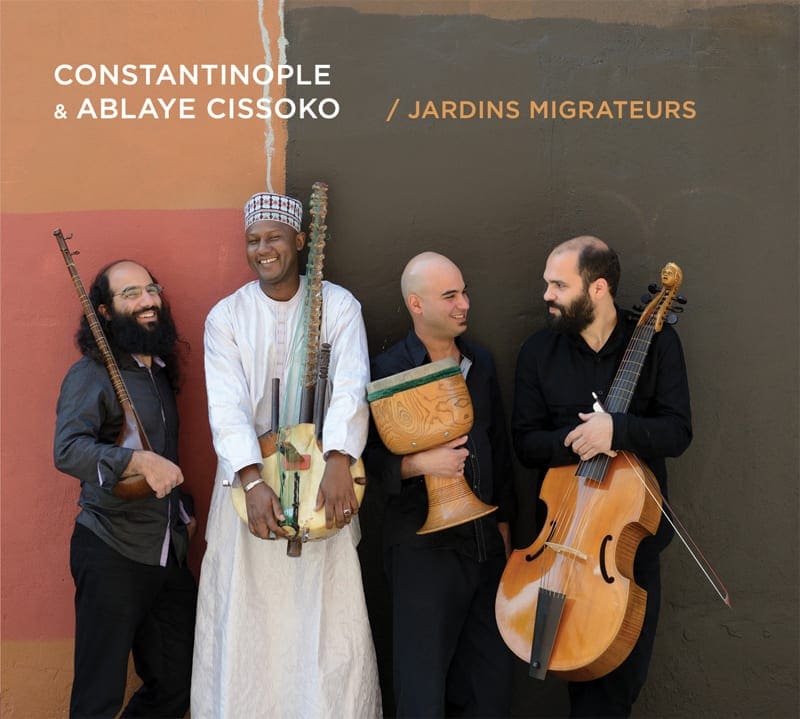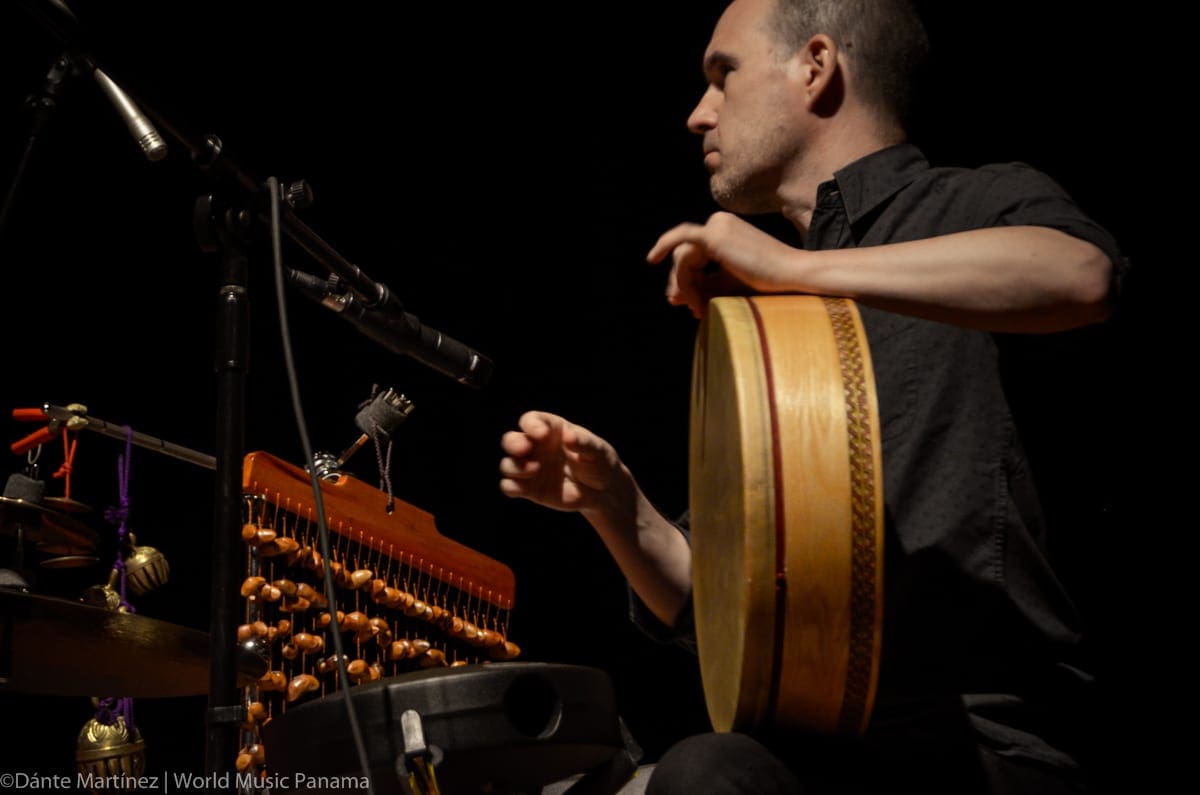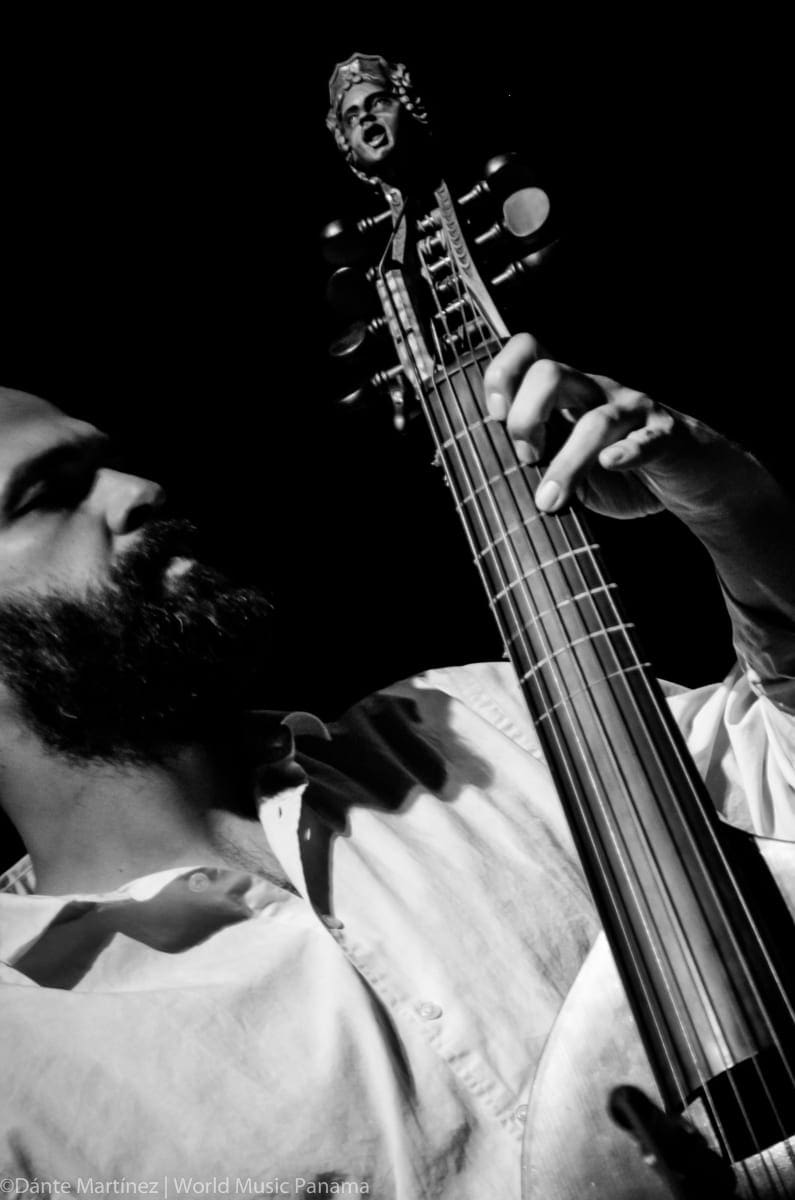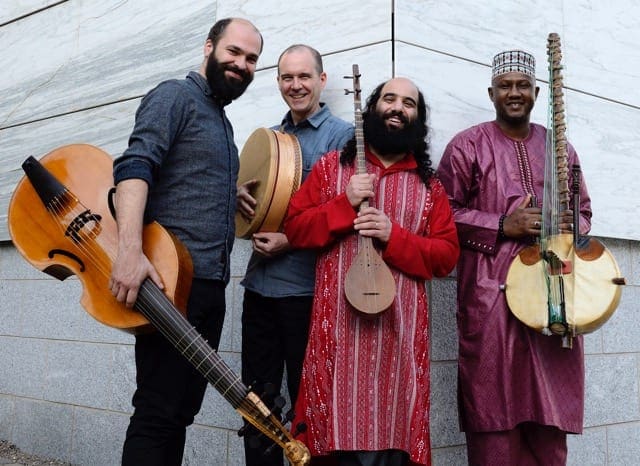
Discography ~ Ay!!Amor... ~ Terra Nostra ~ De Castille à Samarkand ~ MANIA ~ Que le yable les emporte!!! ~ Carrefour de la Méditerranée ~ Terres Turquoises ~ Li tans nouveaus ~ Memoria sefardí ~ Constantinople ~ Jardin de la mémoire

Dastgahé Tchahargah
1Darâmad3:38
2Zangouleh2:19
3Zâbol2:00
4Hessâr5:23
5Mokhâlef6:35
6Mansouri & Hodi4:02
7Rengue2:10

Âvâzé Esfehan
8Pishdarâmad5:50
9Darâmad & Bayêté rajeh6:17
10Oshâq & Foroud3:52

Âvâzé Bayâyé Tork
11Darâmad & Pishdarâmad7:17
12Jâmédarân & Khsravâni2:21
13Shekasteh3:27
14Delkash & Foroud3:51

My garden is my work. My memory is the garden's soil. All that grows on this earth puts down its roots and splits the soil to voyage elsewhere, making itself one with the universe.
K.T.

Persian music, a listening journey

Classical Persian music, like other forms of Persian art, is above all an art of the mind. The musician reflects on the world of his own thoughts. This reflection is the driving force of his music. It is at the centre of the music's circle of creation.

Persian music could be defined as modular rather than linear. It is the layering of different elements, side by side, that constitutes its form. When the musician begins to play, he does not prepare himself to bring the music to a climax. Instead, he starts from a centre point building a whole around himself, like a garden where different flowers grow, side by side.

From a centre, the musician builds a circle of thought. Working in the present moment, the artist who finds himself in the middle of the circle is like a thinker who meditates on this circle of thought. The mood he creates is in this moment, at this place, and this time. Such music, lived and created in the present, comes alive in a dimension which is eternal.

In this music, drama and climax are replaced by a more mystical and Meditative flow, where the listener is invited to experience unique pleasure and ecstasy.

Najmoddin Razi* in his treatise entitled Marmoozate asadi dar mazmoorate davoodi defines creation as: «Listen in order to know, know to do, do to progress, progress to arrive, arrive to find, find to lose yourself, lose yourself to find yourself, find yourself again to know yourself, know yourself to love, love to be loved. Then everything will become clear.»t;

The musician follows this course to interpret his own music. He finds himself in the middle of a world he has discovered and created through reflection. He detaches himself from that world to find himself again - so he can reflect and in so doing, create music.

© Kiya Tabassian

* 13th century Persian mystic

Kiya Tabassian, setar
Ziya Tabassian, tombak

Produced by: Kiya Tabassian & William Dueck (Ombù productions)
Recorded and mixed by: William Dueck
Edited by: Christopher Murtagh
Photos: Yves Lacombe, Babak Izad Khast
Graphic design: Sâed Meshki
Texts: Kiya Tabassian
English translation: Sara Gooderham and Donald Winkler


©2010 Constantinople info@constantinople.ca

1097, rue Saint-Alexandre bureau 304 Montréal (Québec) H2Z 1P8 Canada